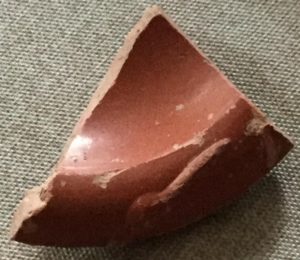
September’s featured item is a pottery sherd terra sigillata piece with Barbotine decoration (barbotine is a ceramic slip made up of the same percentage of clay and water as the pot itself used to decorate the pottery). It is dated to AD 70-230 and was found in a field in Juliomagus, a small settlement on the road connecting Vindonissa (modern Windisch, Switzerland) and Arae Flaviae (modern Rottweil, Germany).
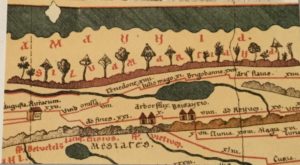 Map of Juliomagus
Terra Sigillata is a modern term for red Roman table ware, sometimes decorated with reliefs. Color and shine are the result of a fine clay glaze that was applied to the pottery before being fired.
Terra Sigillata was extremely popular. Big factories had ovens that could hold up to 35,000 pieces of pottery at once. Already in 30 BC big pottery centers had sprung up in Arezzo and a little later in northern Italy. The pottery was sold all over the Roman territory.
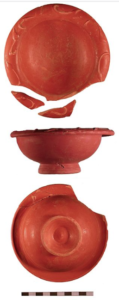
The decorative motif of the pottery often served as the signature of the potter. Although we may not know the name of the potter, because of the motif, we can determine which pieces came from his factory. This sherd is from the style of bowl known as Dragendorff 35. Here is an example of that type.